
Máquina para Fabricación de Mantequilla

.jpeg)
Máquina para Fabricación de Mantequilla
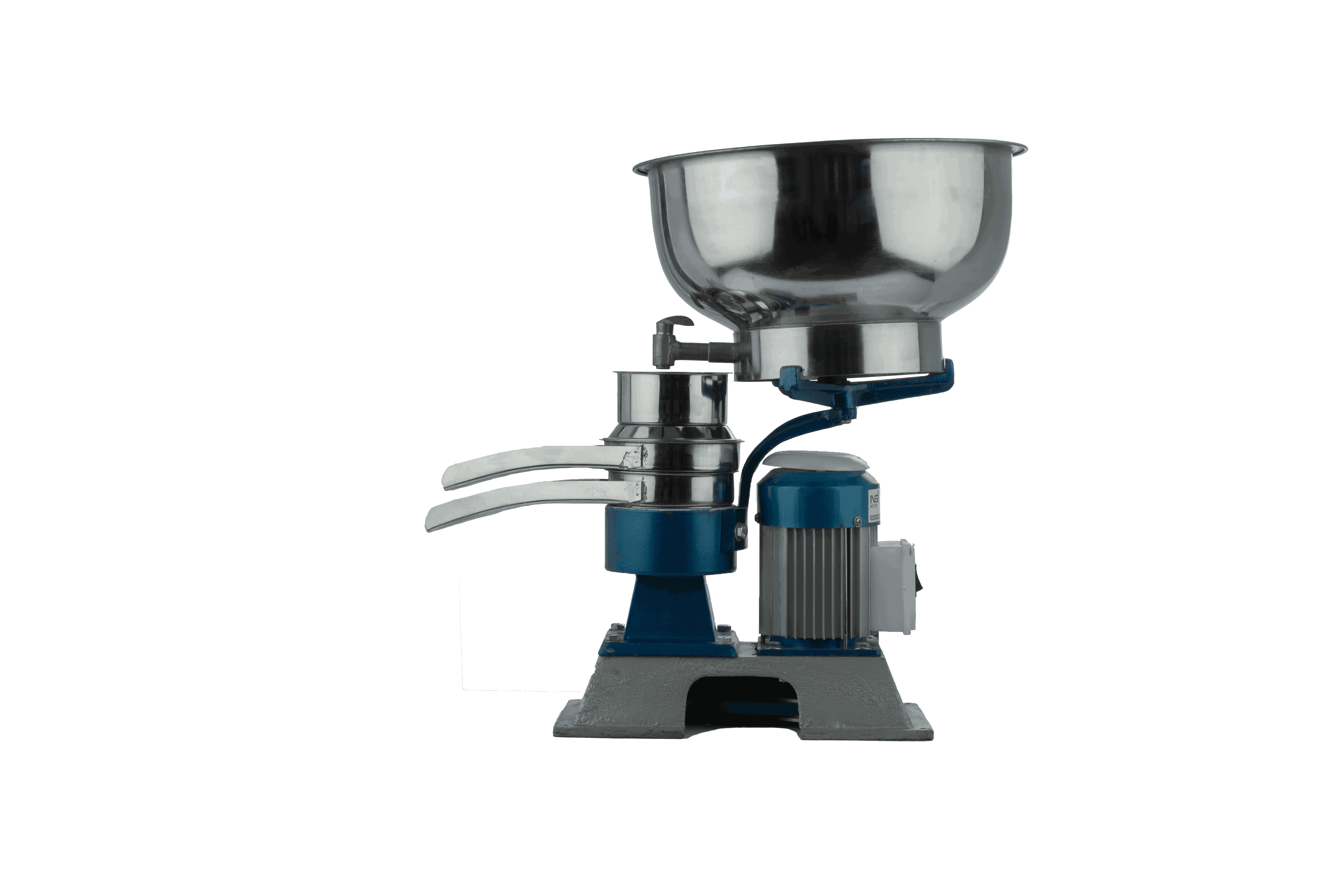
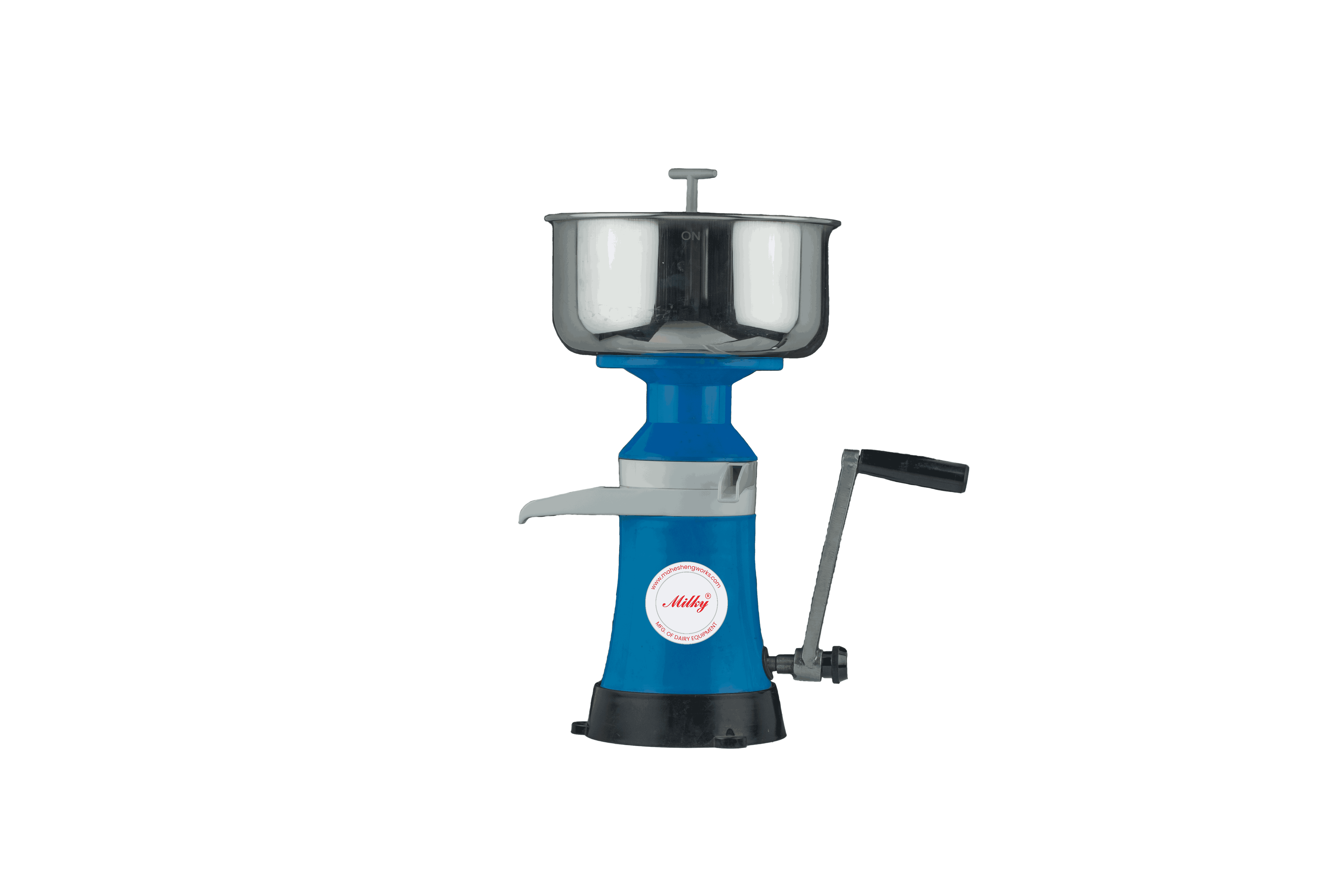
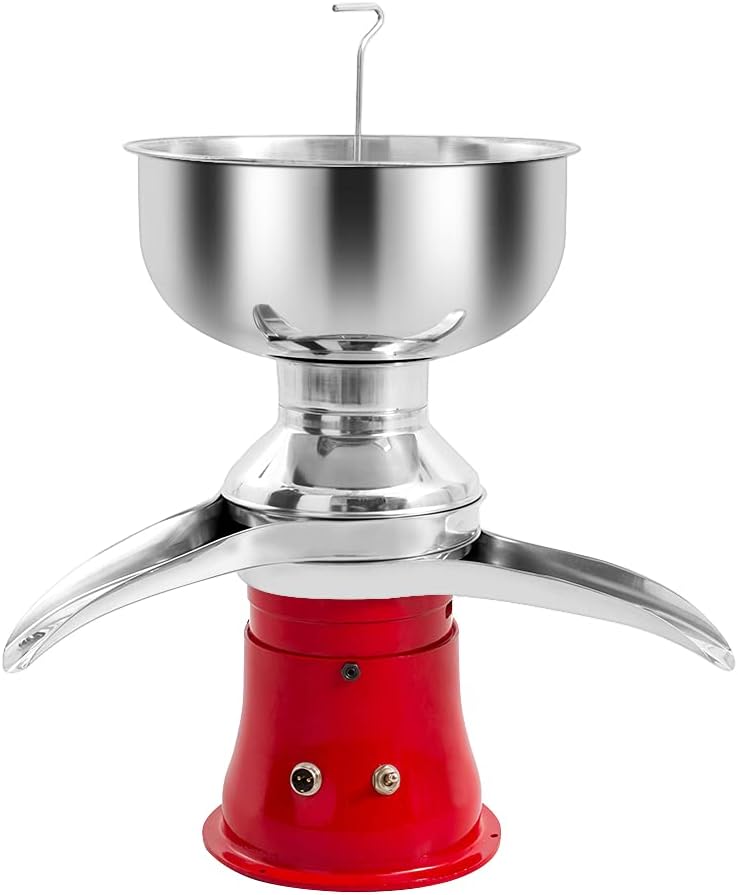
A cream separator is a specialized device used to separate cream from milk. This process is commonly employed in dairy farming, food processing, and various industrial applications to produce cream and skim milk from whole milk. The cream separator utilizes centrifugal force to separate the cream (fat) from the milk, allowing for the production of various dairy products.
How a Cream Separator Works:
Milk Input:
Whole milk is poured into the separator's inlet or feed tank. The milk is typically at a standard temperature and should be free from large particles to ensure efficient separation.
Centrifugal Force:
Inside the separator, the milk is fed into a spinning drum or centrifuge bowl. This drum rotates at high speeds, generating a strong centrifugal force. This force causes the milk to move outward from the center of the drum.
Separation Process:
Due to the centrifugal force, the heavier components of the milk (the skim milk or whey) are pushed towards the outer edges of the drum, while the lighter components (the cream or fat) move towards the center.
Collection of Products:
The separated cream is collected through a designated outlet, usually located at the center of the drum. The skim milk (the remaining milk after cream extraction) is collected through another outlet at the outer edge of the drum.
Adjustment and Control:
Some cream separators have adjustable settings that allow you to control the amount of cream separated. This adjustment ensures that the cream and skim milk meet specific requirements or standards.
Discharge and Maintenance:
After the separation process, the separator needs to be cleaned and maintained to ensure proper functioning and hygiene. The machine is usually equipped with parts that can be disassembled for thorough cleaning.
Key Components of a Cream Separator:
Feed Tank:
The initial chamber where whole milk is introduced into the separator.
Centrifuge Bowl (Drum):
The rotating component where the milk is subjected to centrifugal force to facilitate the separation of cream and skim milk.
Discs (in some models):
Internal discs within the centrifuge bowl increase the surface area for better separation efficiency.
Cream Outlet:
The outlet through which the separated cream is discharged.
Skim Milk Outlet:
The outlet through which the skim milk is discharged.
Drive Mechanism:
The motor or hand crank that powers the rotation of the centrifuge bowl.
Adjustable Control:
Some models have a control mechanism to adjust the thickness of the cream and the amount of cream separated.
Applications:
Dairy Farms:
Used to separate cream for making butter, cheese, or other dairy products while obtaining skim milk for various uses.
Food Processing Industry:
Employed in the production of cream-based products, such as ice cream, sauces, and soups.
Industrial Applications:
Utilized in large-scale dairy processing plants to handle significant volumes of milk and cream separation.
Advantages of Using a Cream Separator:
Efficiency:
Quickly and efficiently separates cream from milk, improving productivity.
Quality Control:
Allows for precise control over the fat content in dairy products, ensuring consistency and quality.
Versatility:
Suitable for various applications, from small-scale dairy operations to large industrial facilities.
Hygiene:
Helps maintain high standards of hygiene by allowing for easy cleaning and maintenance.
Conclusion:
A cream separator is an essential tool in the dairy industry and food processing, designed to efficiently separate cream from milk using centrifugal force. Its key components and operation principles ensure the effective production of cream and skim milk, facilitating the creation of a wide range of dairy products. Whether for small-scale or large-scale operations, cream separators play a crucial role in maintaining product quality and efficiency.

1.png)